
QQQ weekly: 2 - 6 Mar 2026
Pinned at 600

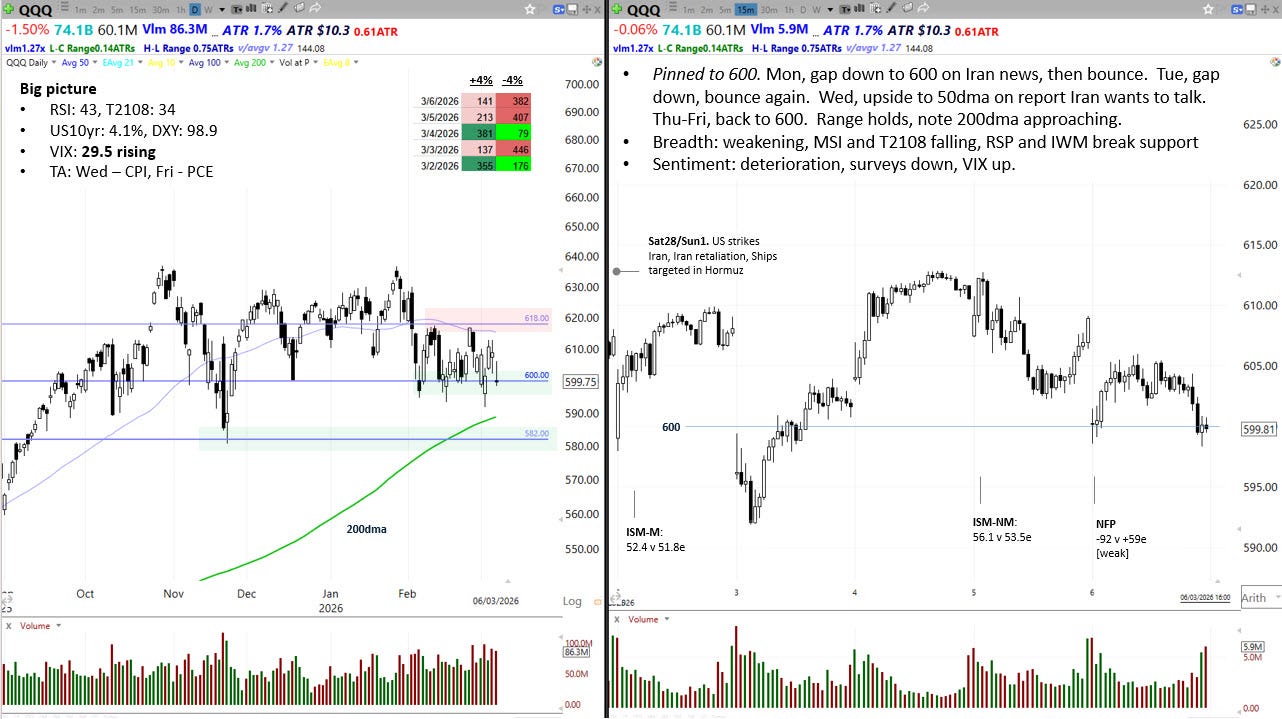
Price action
Last week, after America and Israel launched military action against Iran, we speculated that QQQ could gap down and rally at the open on Monday. That idea was based on the last major geopolitical precedent in Feb 2022 when Russia attacked Ukraine. That was indeed the pattern we saw on Monday, but for the rest of the week QQQ reverted to choppy oscillation around 600, ultimately closing at that level on Friday.
One reason for QQQ and SPY being unable to break their ranges is that there are unusually large options positions outstanding on them. For a discussion of how QQQ and SPY are being “pinned” by the hedging activity of options dealers, see Scott Rubner’s excellent Citadel article here. The punchline is that 5b of options positions roll off by 20 March, after which the indices may move more freely.
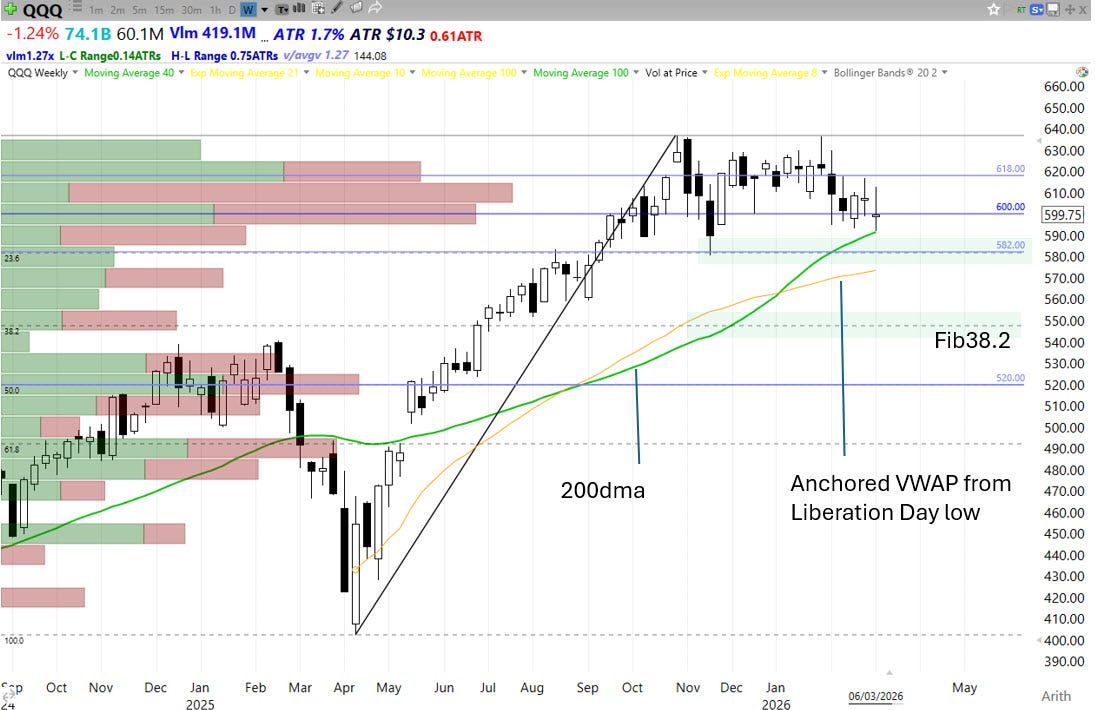
Despite the stabilising dynamic of options dealer hedging, if we get downside, here are the levels I’ll be watching below the 200dma.
The Fed
A difficult, stagflationary week for the Fed to digest. The conflict in Iran brings upward pressure on inflation via spiking energy prices, while Friday’s terrible NFPs brought signs of job market deterioration. This week’s speakers continue to reflect an FOMC split across multiple camps:
First, the emergent hawks. These are the “several participants” described in the most recent Fed minutes who favoured giving “two-sided” guidance on rates. They believe the Fed should be prepping markets about the potential for hikes if inflation doesn’t continue its downward path to 2%. This week, Hammack spoke about two-sided risks on rates and Schmid spoke out against further cuts.
Second, the data-dependent holders who are optimistic about a resumption of cuts after the current pause. Powell is in this camp.
Third, the cutters. Most outspoken is the partisan Miran, who has been calling for cuts of 150-100 bps, dissenting at each meeting in favour of more dovish action than the majority decision. Waller is in this camp too. This week he described Friday’s NFPs as “truly dismal”, asking “why should the Fed sit on its hands?”
So, messaging from the FOMC remains muddled and unclear. Good luck herding those cats, Kevin Warsh.
The Fed is now in blackout until their meeting on 17-18 March, so we have to wait until Powell’s presser for more colour on the Fed’s response to Iran and an energy shock. During the blackout, watch for backchannel messaging through Nick Timiraos of the WSJ or trusted former Fed officials. This week Daly and Kashkari both made the point that the conflict in Iran is a reason for the Fed to hold for “quite a while”. A hawkish March meeting is possible.
Markets & Narratives
1/ Iran
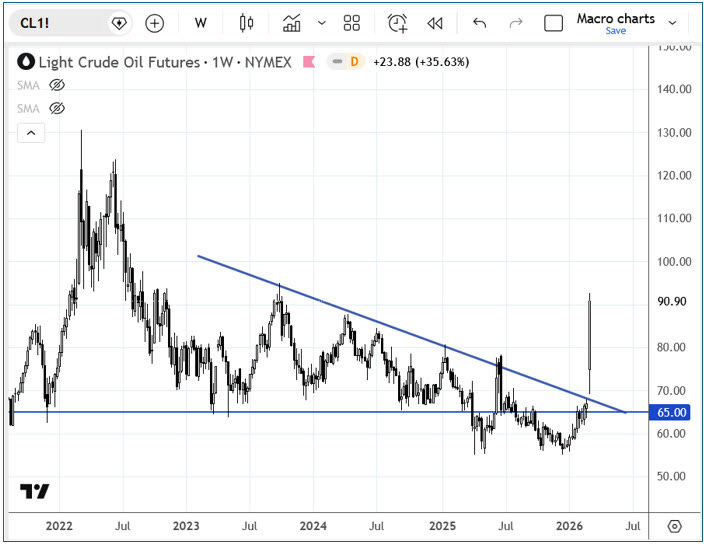
Oil has broken out. The further it goes, the greater the hit to growth, inflation, and earnings, and the greater the damage to stocks. Iran’s strategy is to push energy prices higher in the hope of reaching Trump’s TACO threshold - the point at which higher energy costs intolerably impair his midterm election prospects. So, Iran has closed the Strait of Hormuz and they are targeting regional energy infrastructure.
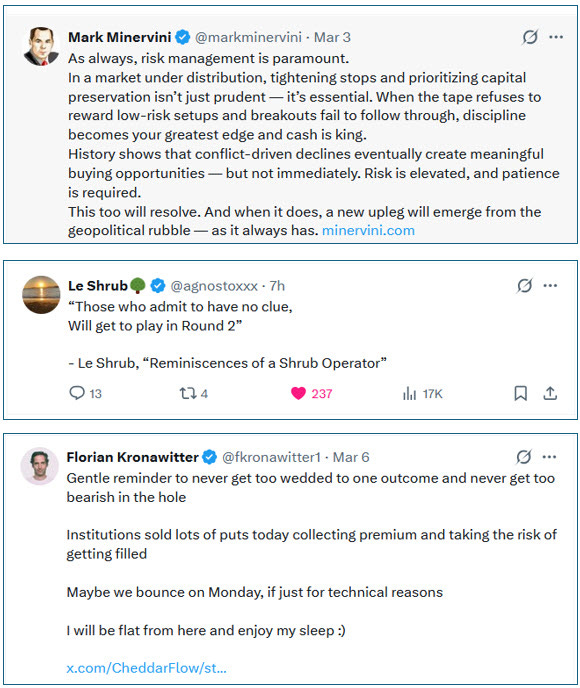
Where we go from here is unpredictable to me, so I’m carrying very low exposures until things become clear. Some nuggets of wisdom from smart folk I follow:
In a nutshell…

2/ Private Credit
More bad news in private credit land this week (more details here). Iran is crowding out coverage of this story despite its significance.
MFS fraud - third fraud in six months after Tricolor and First Brands.
Invico - institutional redemptions from private credit fund leads to imposition of investor gate.
Blackstone - redemptions from BCRED, 7.5% of aum.
Blackrock - TCPC writes down $25m loan to zero.
Breadth
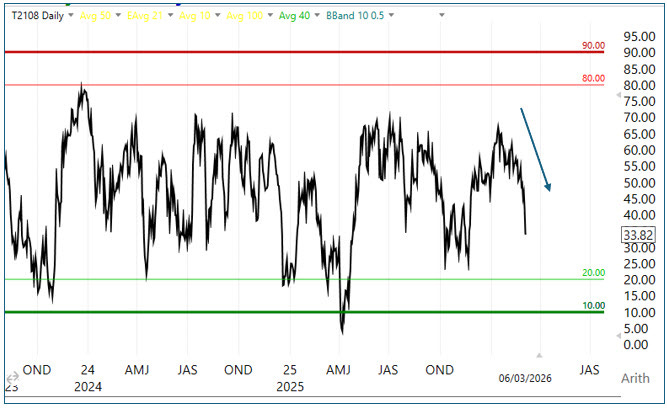
Breadth is clearly deteriorating. However, it isn’t yet at an oversold level consistent with a bounce. % of stocks above their 40dma dropped quickly this week:
Sentiment & Positioning
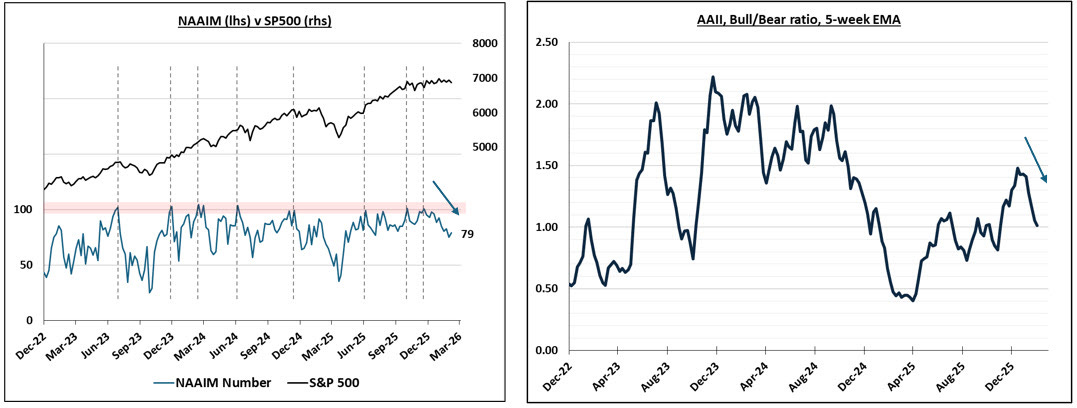
AAII and NAAIM continue to ease back as Middle East headlines intensify. However, neither show the sort of extreme sentiment washout that accompanies a major bottom in stocks. As for the IB surveys, Deutsche remains neutral as does GS.
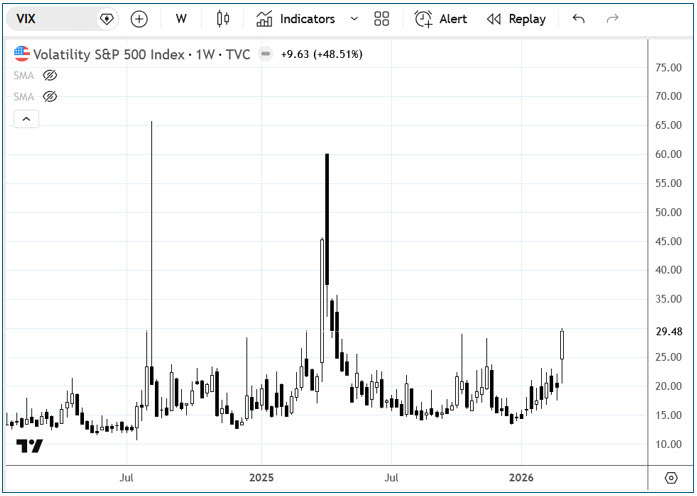
The VIX started to exhibit signs of panic on Thursday and Friday.
Seasonality
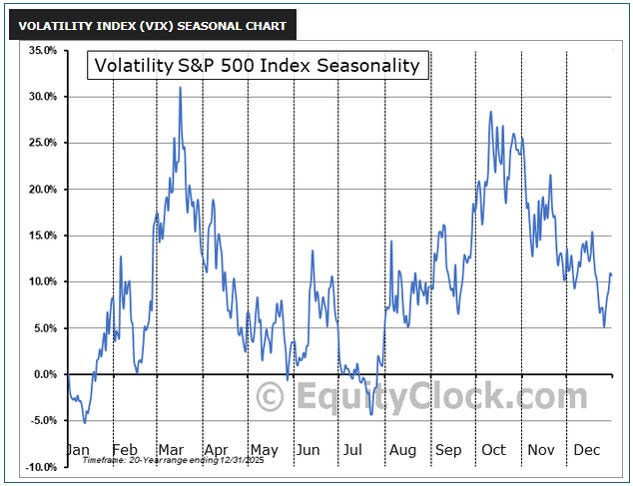
We are in a strong seasonal patch for VIX.
Summary
Price action: QQQ continues to chop around in range despite Middle East headlines. Options market suggests indices are pinned. The long-term primary trend is bullish, but a break below the 200dma would suggest a change.
The Fed: FOMC speakers continue to reveal a divided committee. An energy shock could derail the Fed’s cutting cycle. The Fed is in blackout till its 18 March meeting.
Markets & Narratives: 1/ Iran conflict escalating unpredictably. Energy shock building. 2/ Newsflow relating to private credit continues to worsen.
Breadth: clear deterioration this week, but not oversold enough to suggest a bounce (yet).
Sentiment & Positioning: AAII and NAAIM indicators show deteriorating sentiment but not yet at a bombed-out contrarian bullish condition. VIX suggests building panic.
Seasonality: VIX seasonally strong in first half of March.
Key events next week: Iran headlines, CPI, PCE.
View
Short-term: one week into the Iran conflict and things look too unpredictable to participate. Quick resolution or drawn out crisis both plausible. Price action, breadth, and sentiment indicators aren’t lining up to suggest a bottom yet. Need to see a whoosh lower in stocks to an oversold condition accompanied by a washout in breadth (T2108 down sub 20 or even 10) and a clear washout in sentiment. To take advantage of that opportunity one has to stay out of trouble until it comes along.
Long-term: primary trend still bullish, but evidence is weakening.
Technical evidence
QQQ is holding above its upward-sloping 200dma. However, a break below that moving average would suggest a trend change.
Fundamental evidence
The Fed is gradually cutting rates. However, several FOMC members have begun to entertain the idea of hikes if inflation does not continue to fall. An energy shock could derail the cutting cycle.
Fiscal stimulus from Trump’s spending bill.
US economy is strengthening, supporting earnings.
Challenges and risks:
Iran conflict and energy shock.
Private credit problems.
Uncertainty relating to AI.
AI-disruption, OpenAI’s ability to honour its spending commitments, NVDA’s monopoly, capex depreciation, hyperscaler credit spreads, skepticism relating to scaling assumptions.
Fed independence.
PS…
If you enjoy these posts and find them useful, please do share with colleagues, friends, or on social media. Thank you.
Alex